The Manufacturing Plant Setup Checklist for New Owners

What It Really Takes to Activate a New Manufacturing Facility
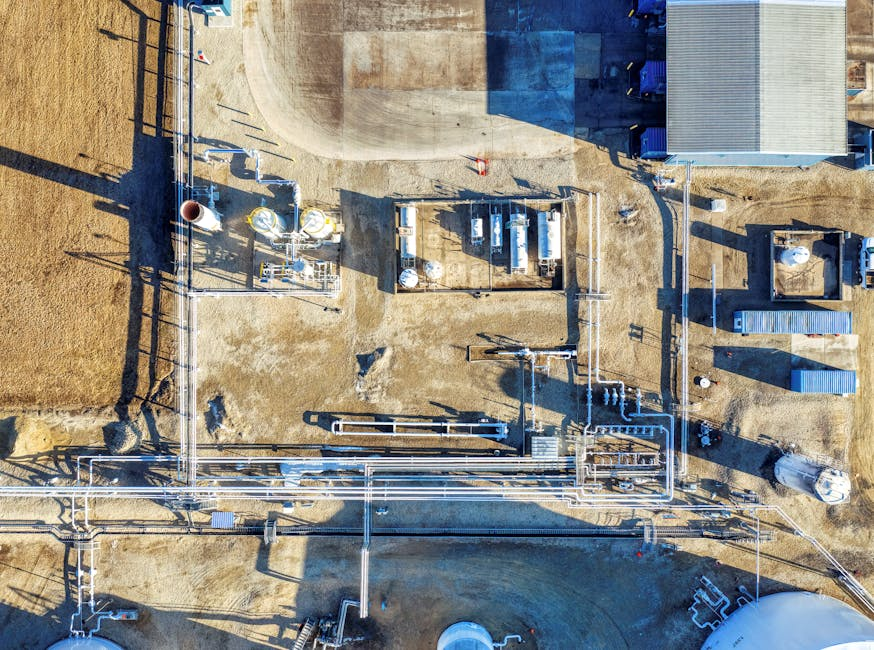
Manufacturing plant setup is one of the most complex facility projects a business leader will ever manage. Get it right and you have a production engine built for long-term performance. Get it wrong and you face costly rework, regulatory delays, and a facility that fights your workflow instead of supporting it.
Here is a quick overview of the core steps involved:
Define strategic objectives - product type, output targets, regulatory requirements
Conduct a feasibility study - site suitability, utility capacity, zoning compliance
Select and secure your site - logistics access, labour availability, expansion potential
Obtain permits and regulatory approvals - BC Building Code, environmental, occupancy
Complete design and layout planning - value stream alignment, hygienic design, material flow
Execute construction and MEP coordination - structure, mechanical, electrical, plumbing
Install and commission equipment - integration, testing, safety validation
Recruit and train your workforce - operations, safety, compliance
Run trial production - identify gaps before full-scale launch
Achieve full operational readiness - quality control, supply chain, logistics active
Most standard manufacturing projects take 18 to 36 months from planning to full production. Fast-track projects can move in 12 to 18 months with prefabricated systems and disciplined pre-construction planning. Complex, high-tech facilities may require 24 to 48 months.
Every phase has dependencies. A delay in permitting pushes construction. Late equipment orders stall commissioning. Skipping layout simulation leads to workflow problems you can only fix after opening.
This guide walks you through each phase with the precision that industrial projects demand.
I'm Craig Garden, founder of NRG Consulting & Contracting, and I've led design-build delivery across industrial, food-grade, pharmaceutical, and cGMP facilities throughout the Lower Mainland - including every phase of manufacturing plant setup from pre-construction planning through to occupancy. The checklist below reflects what actually works on complex industrial projects in BC.
Strategic Planning for a Manufacturing Plant Setup

Strategic planning defines the trajectory of your entire operation. We see many owners rush into property acquisition before they fully understand their process requirements. This oversight creates immediate risks, such as insufficient power for heavy machinery or floor loads that cannot support specialized equipment.
We advocate for an integrated approach where industrial architecture and process engineering happen simultaneously. When you align the building shell with the internal industrial process plant requirements, you avoid the disruptive rework that plagues traditional construction projects.
A robust strategic plan includes a deep dive into your operational requirements. You must define your inbound and outbound shipment volumes, specialized utility needs (such as high-pressure steam or industrial wastewater treatment), and strict cleanliness classifications if you operate in the pharmaceutical or food sectors. Without this data, your manufacturing plant setup lacks the foundation necessary for a smooth activation.
Site Selection and Regulatory Alignment
Selecting the right location involves more than just finding available square footage. In the Fraser Valley, we evaluate sites based on their proximity to major transport corridors like Highway 1 and the specific zoning bylaws of municipalities like Abbotsford, Langley, and Chilliwack.
Zoning remains one of the most significant hurdles. We often find that a property's current designation might allow for "light industrial" but prohibits the specific chemical processing or heavy fabrication you intend to perform. Engaging with local authorities early prevents the 3-to-9-month delays associated with rezoning applications.
Utility capacity is another critical screening factor. Modern manufacturing facilities require massive power draws and high-volume water access. We verify that the local grid can support your peak loads before you sign a lease or purchase agreement. For owners looking to optimize their footprint from day one, resources from the Lean Enterprise Institute provide excellent frameworks for evaluating how site constraints will impact long-term operational waste.
Optimizing the Manufacturing Plant Setup Layout

A well-designed layout does more than just fit machines into a room; it accelerates your production cycle. We prioritize value stream alignment, which means we map the physical journey of your product from raw material entry to final dispatch.
In regulated environments, such as food processing or nutraceuticals, we implement hygienic design principles. This includes clear separation between "clean" and "dirty" zones to prevent cross-contamination. We also design for "straight-line" material flow or "U-shaped" configurations. Research indicates that a optimized U-shaped layout can reduce forklift travel time by up to 40% and increase overall production capacity by 10%.
Key principles we follow during layout design include:
Scalability: We ensure the layout allows for 20% to 40% future growth without requiring a total facility overhaul.
Visibility: We create open sightlines and central supervisor stations to support real-time communication.
Safety and Ergonomics: We design workstations that minimize repetitive strain and ensure clear, unobstructed pedestrian walkways.
For a deeper dive into the technical nuances of floor planning, you can explore this guide on how to plan and design a manufacturing plant layout.
Managing the Construction and Permitting Timeline
The timeline for a manufacturing plant setup depends heavily on your delivery method. We utilize the EPC (Engineering, Procurement, and Construction) design-build model because it allows us to overlap phases. While we wait for final building permits, we can begin procurement for long-lead mechanical components.
The following table outlines realistic expectations for facility activation in the current BC market:
Phase | Standard Timeline | Fast-Track (Modular/Prefab) | Complex High-Tech |
Site Search & Acquisition | 3–6 Months | 2–4 Months | 6–12 Months |
Design & Permitting | 3–9 Months | 3–6 Months | 9–18 Months |
Construction | 6–18 Months | 4–10 Months | 18–30 Months |
Equipment Installation | 3–6 Months | 2–4 Months | 6–12 Months |
Commissioning & Hiring | 2–4 Months | 1–2 Months | 4–8 Months |
Total to Production | 18–36 Months | 12–18 Months | 24–48 Months |
We manage these timelines by identifying "critical path" items early. For example, industrial electrical transformers currently have significant lead times. We order these components during the initial design phase to ensure they arrive exactly when the building is ready for power. Our industrial services team coordinates these moving parts to keep your project on schedule.
Technical Execution and Facility Activation
Technical execution is where the blueprints become a functional facility. This phase requires intense MEP (Mechanical, Electrical, and Plumbing) coordination. In a manufacturing environment, the building systems are just as important as the production machinery.
We focus on creating a "plug-and-play" infrastructure. This means we install robust power pathways and utility drops that align precisely with your equipment layout. If you change a machine in three years, the infrastructure should be flexible enough to accommodate that change without major demolition.
Proper industrial ventilation systems are also vital, especially if your process generates heat, dust, or chemical vapours. We design these systems to exceed BC Building Code requirements, ensuring a safe environment for your team and protecting your sensitive equipment from airborne contaminants.
Infrastructure and Equipment Integration
Equipment integration is the most delicate part of the manufacturing plant setup. We don't just "drop" machines onto the floor. We coordinate the installation of specialized foundations, vibration-dampening pads, and precision-aligned utility connections.
For facilities undergoing a transition, we often work with industrial demolition contractors in Surrey to clear out legacy structures or redundant systems before the new equipment arrives. This ensures a clean slate for modern, high-efficiency production lines.
During this stage, we also coordinate the digital infrastructure. While we don't manage the software itself, we build the physical pathways for data cabling and ensure that device placements for sensors and control panels are accessible and protected from the industrial environment.
Ensuring Compliance and Operational Safety
Safety and compliance are non-negotiable in BC. We build every facility to adhere to Canadian GMP (Good Manufacturing Practices) standards when required. This involves more than just following a checklist; it requires a culture of "hygienic thinking" throughout the construction process.
We implement:
Sanitation Workflows: Sloped floors with industrial-grade drainage and washdown-safe wall finishes.
Life Safety Systems: Integrated fire suppression, emergency lighting, and clear egress routes that comply with the BC Building Code.
Air Quality Controls: HEPA filtration and pressure differentials for cleanroom environments.
If you are moving into an older building, an industrial plant renovation is often necessary to bring the facility up to modern safety and environmental standards. We identify these needs during the pre-construction phase to avoid surprises during the final inspection.
Finalizing Your Manufacturing Plant Setup in BC
The final steps of your manufacturing plant setup involve securing your occupancy permit and transitioning from a construction site to a live production facility. We walk you through the final inspections with municipal officials in Surrey, Mission, or Abbotsford to ensure every system meets the approved design.
Before you go to full-scale production, we recommend a trial run period. This allows us to test the MEP systems under full load and identify any minor adjustments needed in the workflow. It also provides a safe window for your newly hired workforce to train on the equipment and safety protocols.
At NRG Consulting & Contracting, we remain your partner through the final commissioning. We provide complete as-built drawings and maintenance manuals so your operations team can manage the facility with confidence. Whether you are expanding in Chilliwack or launching a new venture in Maple Ridge, our industrial services ensure your facility is ready for day-one performance.
Ready to activate your facility?
Going from an empty site to a fully operating plant takes careful planning, technical coordination, and the right team. With local BC experience and end-to-end support, NRG Consulting & Contracting helps simplify your manufacturing plant setup from construction through commissioning. Explore our industrial services or learn more about industrial process plants to start building a facility that is ready to perform from day one.


Comments