How to Manage Commercial Demolition and Steel Work

Planning and Executing Commercial Demolition Services

Commercial demolition services are a critical first step in any facility transformation — whether you're clearing space for a new industrial build, decommissioning a regulated environment, or preparing a commercial site for reconstruction.
Here's a quick overview of what commercial demolition services typically involve:
Service Type | What It Covers |
Full Structural Demolition | Complete teardown of a building or facility down to the foundation |
Selective Interior Demolition | Targeted removal of specific interior components while preserving the structure |
Industrial Decommissioning | Safe shutdown and removal of equipment, utilities, and systems in regulated facilities |
Concrete and Foundation Removal | Cutting, breaking, and hauling concrete slabs, walls, and footings |
Environmental Remediation | Identification and removal of hazardous materials such as asbestos and lead |
Site Preparation | Grading, soil stabilization, and clearing to ready the site for new construction |
Getting demolition right requires more than heavy equipment. It demands careful sequencing, permit acquisition, utility disconnects, hazardous material identification, and strict compliance with BC Building Code and WorkSafeBC standards. A missed step early in the process can cascade into significant delays and rework downstream.
This is especially true in regulated environments — pharmaceutical facilities, food processing plants, and cGMP spaces — where contamination control and structural integrity are non-negotiable throughout every phase of the project.
I'm Craig Garden, founder of NRG Consulting & Contracting, and my team has delivered commercial demolition services across complex industrial and regulated facilities throughout the Lower Mainland, where precision planning and accountability are built into every scope. In the sections below, I'll walk you through how to plan and execute demolition effectively — from initial site assessment through to final site preparation for new construction.
Successful commercial demolition services begin long before the first excavator arrives on-site. We treat demolition as a reverse engineering process. You must understand how a building stands up before you can safely take it down. In the Fraser Valley, from Surrey to Chilliwack, our diverse landscape of tilt-up concrete warehouses and older steel-frame industrial plants requires a customized approach for every project.
We start with a comprehensive site assessment. This involves reviewing original structural drawings to identify load-bearing members and structural dependencies. We often find that older facilities have undergone undocumented modifications. Our team identifies these "hidden" structural elements to prevent unplanned collapses.
Utility coordination is the next critical pillar. We manage the termination of gas, water, electricity, and telecommunications. In industrial settings, this often includes specialized process piping or high-voltage lines. We ensure all "kills" are verified and capped according to municipal standards in Langley or Abbotsford.
Selecting the Right Commercial Demolition Services for Regulated Facilities
When you operate a cGMP (current Good Manufacturing Practice) facility, standard demolition techniques are often too disruptive. Pharmaceutical and food-processing plants require surgical precision. We specialize in selective interior demolition that allows your facility to remain operational in adjacent zones.
In these environments, we implement strict contamination control. This includes HEPA-filtered negative air machines and physical barriers to prevent dust and debris from migrating into cleanrooms or production lines. We coordinate with your quality assurance teams to ensure our Industrial Demolition Contractors Surrey follow the specific sanitation workflows your industry demands.
Whether we are removing outdated stainless steel tanks or stripping out MEP (Mechanical, Electrical, and Plumbing) systems, we focus on maintaining the hygienic integrity of the base building. We also manage the local regulations and building demolition permits required for these specialized teardowns, ensuring your facility stays compliant with BC health and safety standards.
Structural Steel Coordination and Site Preparation
Demolition and steel work go hand-in-hand. Often, a project requires removing a portion of a building while reinforcing the remaining structure. This is where structural remediation becomes vital. We install temporary shoring and structural steel supports to maintain stability during the transition.
Our team manages the integration of new steel stud framing with existing load-bearing members. This requires precise MEP coordination. We map out where new electrical runs and HVAC ducting will interface with the modified steel structure. In some cases, we handle the historical preservation of structures by salvaging key architectural or structural elements while clearing the rest of the site for modernization.
By managing both the teardown and the structural reinforcement, we eliminate the communication gaps that often occur between separate demolition and framing crews. This integrated project delivery ensures that the "new" steel work aligns perfectly with the "old" foundation.
Safety Protocols and Waste Management in Commercial Demolition Services
Safety is the foundation of our work, not just a regulatory checkbox. We develop site-specific safety plans that strictly adhere to WorkSafeBC standards. This includes establishing clear exclusion zones and implementing rigorous fall protection for high-reach demolition.
Reputable contractors in our industry often see over 90% of their work come from repeat clients because of this commitment to safety and integrity. We also prioritize "eco-accountability." Modern commercial demolition services should aim to divert as much waste as possible from our local landfills.
Feature | Full Structural Demolition | Selective Interior Demolition |
Primary Goal | Complete site clearing for new builds | Renovation or repurposing of existing space |
Structural Impact | Total removal of load-bearing elements | Preservation of core structural integrity |
Equipment Used | High-reach excavators, wrecking balls | Robotic demolition, handheld saws, small loaders |
Waste Stream | High volume of concrete, steel, and wood | Focused on drywall, MEP, and finishes |
Safety Focus | Exterior collapse zones and dust control | Indoor air quality and utility isolation |
We track our waste diversion metrics carefully. We sort materials on-site — separating structural steel, copper piping, and clean concrete. Leading contractors in the sector often report that they can recycle or repurpose up to 90% of a building’s materials. This not only supports LEED accountability but also allows for asset recovery, where salvaged metals can offset other project requirements.
Finalizing the Site for Industrial Reconstruction
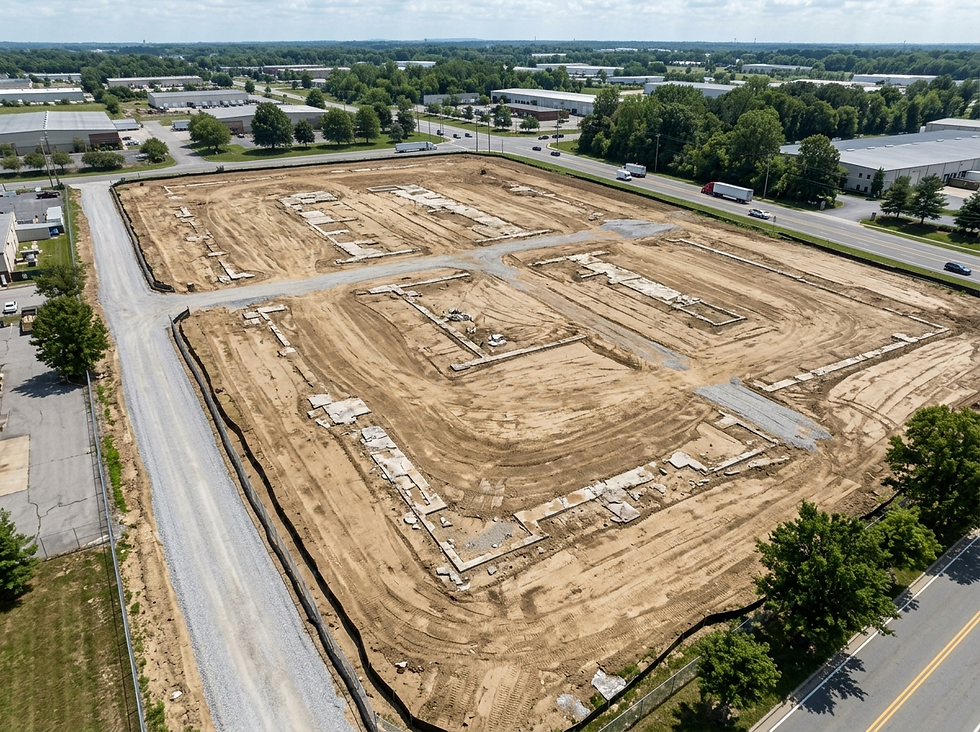
Once the vertical structure is gone, the focus shifts to the ground. Finalizing a site requires a transition from destruction to preparation. We don't just leave a hole in the ground; we prepare a platform for your next phase of growth.
In the Fraser Valley, soil conditions vary significantly. Sites in Maple Ridge or Mission may require different stabilization techniques than those in the sandy soils of the Delta. We manage the following site preparation steps to ensure operational readiness:
Concrete Crushing and Slab Removal: We break up old foundations and, where possible, crush the concrete on-site to be used as structural fill.
Soil Stabilization: We test and compact the soil to meet the load-bearing requirements of your new industrial equipment or structure.
Grading and Leveling: We ensure proper drainage flow, preventing future water ingress issues.
Utility Capping and Rerouting: We finalize the positioning of underground services to align with the new site plan.
Final Inspection and Sign-off: We coordinate with municipal inspectors to ensure the cleared site meets all BC Building Code requirements for the next construction permit.
Managing Debris and Environmental Remediation
Environmental remediation is a major component of modern commercial demolition services. If your facility was built several decades ago, there is a high probability of encountering hazardous materials. Our team is trained to identify and manage:
Asbestos Abatement: Proper containment and disposal of insulation, floor tiles, and roofing materials.
Lead Removal: Safe handling of lead-based paints and older plumbing components.
Toxic Material Handling: Managing chemical residues in industrial piping or soil contamination from previous manufacturing processes.
We follow strict Lower Mainland waste disposal guidelines, ensuring all hazardous materials are transported to licensed facilities with full chain-of-custody documentation. This protects you from future litigation and ensures your new build starts on a clean, safe slate.
Integrating New Structural Steel with Existing Foundations
The final step in managing the transition from demolition to construction is the integration of new structural steel. This often involves seismic upgrades. The BC Building Code has rigorous standards for seismic resilience, especially for multi-story industrial facilities.
We use precision engineering to anchor new steel columns to existing or reinforced foundations. This "steelage" phase requires technical coordination to ensure that new load paths are correctly established. By using an integrated project delivery model, we ensure that the demolition phase has left the foundations in the exact condition needed for the new steel erection. This prevents the "surprise" modifications that often plague projects where the demolition and steel crews don't talk to each other.
Whether you are expanding a food processing plant in Chilliwack or retrofitting a pharmaceutical warehouse in Langley, this seamless transition is what keeps your project on schedule and your facility performing at its peak.
Conclusion and Next Steps
Managing commercial demolition services and structural steel work is a high-stakes balancing act. It requires a partner who understands the nuances of regulated environments, the technical demands of structural steel, and the strict safety requirements of the BC construction landscape.
At NRG Consulting & Contracting, we bring decades of experience to every project across Surrey, Langley, Abbotsford, and the surrounding regions. Our design-build expertise allows us to see the finished facility even while we are tearing down the old one. We prioritize transparent communication and precision execution to ensure your industrial facility is built on a foundation of quality and compliance.
Ready to transform your space? Explore our Commercial Services or contact us today to discuss your project requirements. We are here to help you build your legacy with confidence.


Comments