How to Plan Your Construction Properly

Why Project Planning Construction Determines Your Facility's Success
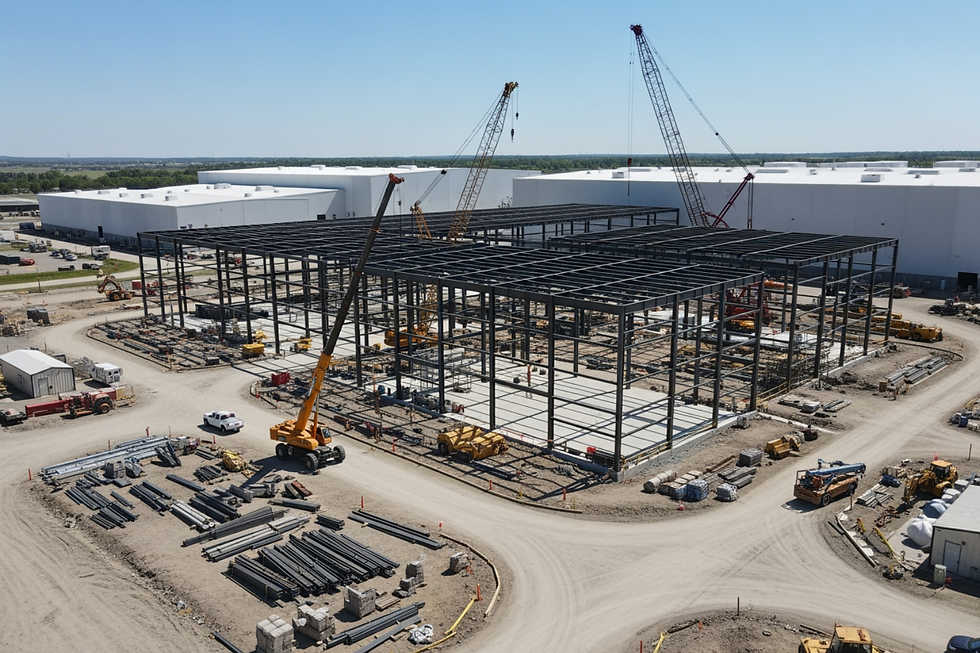
Project planning in construction is the systematic process that transforms your facility concept into a complete, code-compliant building—on schedule and ready for operations.
Quick Answer: Essential Project Planning Construction Steps
Define scope and objectives — Clarify what you're building, why, and for whom
Conduct feasibility assessment — Evaluate site conditions, regulations, and technical requirements
Create Work Breakdown Structure (WBS) — Break the project into manageable, trackable activities
Develop project schedule — Map activities, dependencies, and milestones using CPM or similar methods
Plan resources and procurement — Identify labor, materials, and equipment needs with realistic timelines
Identify and mitigate risks — Address financial, technical, safety, and regulatory challenges early
Integrate technology and tools — Use BIM, project management software, and coordination platforms
Ensure compliance — Secure permits and align with BC Building Code, WorkSafeBC, and environmental regulations
Research shows that construction execution consumes 60-70% of the total project timeline—but the decisions you make before breaking ground control the majority of your project's final cost and performance.
Without structured planning, industrial and commercial projects risk costly design errors, regulatory delays, scope creep, and disruptive rework. For facility owners in regulated environments—food manufacturing, pharmaceutical production, GMP cleanrooms—the stakes are even higher. A single oversight in hygienic design, process flow, or documentation can trigger compliance failures that halt operations.
Effective planning starts with reasoning backward. You begin with the finished facility—its performance requirements, operational constraints, regulatory standards—and work back through every activity, resource, and decision needed to deliver it. This approach, adapted from engineering project management principles, prevents the chaotic firefighting that plagues projects without a clear roadmap.
In this guide, we walk you through the fundamental components of project planning construction. You'll learn how to define scope without ambiguity, structure work into trackable packages, develop realistic schedules, manage resources efficiently, and integrate modern tools like BIM and CPM scheduling.
We'll also cover BC-specific compliance considerations and risk mitigation strategies that protect your project from common failure modes.
Whether you're expanding a Surrey food processing plant, building out a Langley pharmaceutical cleanroom, or renovating a Chilliwack industrial office, the principles remain the same: plan thoroughly, execute systematically, and maintain control from pre-construction through closeout.
The Fundamentals of Project Planning Construction

Successful construction project phases follow a sequential logic. Each stage builds on the previous one to ensure that the final industrial asset meets your operational needs. We break these fundamentals into six core phases:
Project Conception and Design: We transform your abstract operational requirements into concrete plans. This involves defining what you want to build and how it meets your specific cGMP or industrial standards.
Procurement Strategy: We identify the materials, specialized equipment (such as HVAC for cleanrooms), and trade partners required.
Pre-Construction Steps: This phase involves site analysis, securing permits, and finalizing the project planning construction roadmap before mobilization.
Construction Execution: The physical build-out of the facility. This stage typically requires the most resources, labor, and equipment.
Monitoring and Control: This runs concurrently with execution. We track progress against the schedule and quality standards to apply corrective actions immediately if deviations occur.
Project Closeout and Handover: We conduct final inspections, complete punch lists, and transfer all documentation, warranties, and O&M manuals to your operations team.
Mastering construction project management requires viewing these phases not as isolated events, but as an integrated system.
Defining Scope and Feasibility for Regulated Facilities

Before we draw a single line on a blueprint, we must establish the project's boundaries. A well-defined scope serves as the "single source of truth" for all stakeholders. In the Fraser Valley, from Abbotsford to Maple Ridge, site conditions vary significantly, making site due diligence essential.
Project Objectives: We define clear, measurable goals. For a pharmaceutical facility, this might include specific ISO cleanroom classifications or throughput capacities.
Feasibility Assessment: We evaluate the technical and regulatory viability of the project. Can the existing utility infrastructure in Mission support your new equipment? Does the soil in Chilliwack require specialized reinforcement for heavy machinery?
Site Due Diligence: We conduct topographic surveys, soil testing, and utility location. Identifying underground obstacles or poor soil drainage early prevents expensive downstream rework.
Avoiding Scope Creep: We explicitly list exclusions in the scope statement. By defining what we are not building, we protect the project from the gradual expansion of requirements that often leads to schedule delays.
Stakeholder alignment during this phase is critical. We use collaborative sessions to ensure facility owners, operations directors, and engineers agree on the development management services required to move forward.
Structuring the Work Breakdown Structure (WBS) and Coding
A Work Breakdown Structure (WBS) is a tool that decomposes the entire project into smaller, manageable parts. Without a WBS, you lack the structure needed for effective accountability.
Deliverable-Based WBS: This focuses on the physical components of the building, such as the foundation, building envelope, and MEP (Mechanical, Electrical, Plumbing) systems.
Phase-Based WBS: This organizes work by project stages, such as pre-construction, procurement, and commissioning.
Work Packages: These are the smallest manageable units. Each package includes a defined scope, duration, resource requirement, and assigned responsibility.
MASTERFORMAT Coding: We utilize the North American standard hierarchical coding system to organize plans. Using MasterFormat (e.g., Division 03 for Concrete, Division 22 for Plumbing) ensures that our estimates, schedules, and field reports all speak the same language.
This hierarchical decomposition allows us to roll up data from individual tasks to provide a clear picture of the overall project status.
Developing a Project Planning Construction Schedule
A schedule is more than a list of dates; it is a dynamic model of how the project will be built. We use several advanced techniques to ensure efficient project delivery.
Critical Path Method (CPM): We identify the sequence of activities that determines the shortest possible project duration. Any delay in a critical path activity, such as the curing of specialized hygienic flooring, will directly impact the final completion date.
Precedence Relationships: We define how tasks interact. Some tasks are "Finish-to-Start" (e.g., you cannot install wall panels until the steel frame is inspected), while others may have "Lags" (e.g., waiting seven days for concrete to reach design strength).
Last Planner System (LPS): Created by the Lean Construction Institute, this system promotes predictable workflows. It involves "Pull Planning," where trade partners work backward from a milestone to identify the exact requirements needed to start their work.
Activity Durations: We estimate durations using quantity take-offs and historical productivity rates. For example, if we know a crew can install 50 linear feet of process piping per day, and the project requires 500 feet, we schedule 10 days for that activity, adjusted for site constraints.
By tracking milestones and using Gantt charts, we provide you with a visual representation of progress, ensuring the construction project execution remains on track.
Resource Management and Procurement Strategies
Resource management ensures that labor, materials, and equipment are available exactly when needed. Misaligned resources lead to "idle time," which is one of the primary causes of project inefficiency.
Labor Allocation: We match the skills of our team and trade partners to the specific demands of the project, such as certified welders for high-pressure steam lines.
Just-In-Time (JIT) Delivery: To manage site logistics in congested areas like Surrey or Langley, we schedule materials to arrive 2-3 days before they are needed. This reduces on-site storage requirements and minimizes the risk of material damage.
Equipment Optimization: We coordinate the use of heavy machinery, such as cranes or excavators, to ensure they are utilized efficiently across different work packages.
Vendor Evaluation: We pre-qualify suppliers based on their ability to meet stringent industrial quality standards and delivery timelines.
Effective resource monitoring allows us to optimize the supply chain and maintain a steady production rhythm, often referred to as "Takt planning" in lean construction.
Risk Mitigation and Safety Protocols in BC
In the BC industrial sector, risk management is not optional. We identify, assess, and mitigate risks before they impact the site. This includes adhering to the BC Building Code and ensuring full WorkSafeBC compliance.
Risk Category | Examples | Mitigation Strategy |
Financial | Material price volatility, scope gaps | Detailed pre-construction estimating, fixed-sum contracts |
Project | Weather delays, labor shortages | Weather-adjusted scheduling, proactive labor strategy |
Technical | Equipment failure, design flaws | Preventative maintenance, 3D coordination/BIM |
Safety | On-site accidents, falls | Site-specific safety plans, PPE mandates, daily huddles |
Regulatory | Permit delays, code non-compliance | Early agency coordination, third-party inspections |
Our safety protocols include regular site drills, hazard identification tours, and mandatory safety orientations for every person entering the site. In regulated environments, we also manage environmental risks, such as erosion control and the proper handling of process waste, to ensure compliance with municipal regulations in Abbotsford and beyond.
Integrating Technology into Project Planning Construction
Modern technology has transformed how we plan and manage facilities. We integrate digital tools to improve precision and transparency.
Building Information Modeling (BIM): We create 3D digital representations of the facility. This allows us to perform "clash detection," identifying where a duct might interfere with a structural beam before construction begins.
4D Scheduling: We link the 3D model to the project schedule. This provides a visual simulation of the construction process over time, helping stakeholders understand the sequence of work.
Reality Capture: We use laser scanning or drone photography to capture accurate site data. This is particularly useful for tenant improvements in existing facilities where as-built drawings may be outdated.
Facility Control Systems: We coordinate the construction of data infrastructure and power pathways for your building automation systems (BAS). This ensures your HVAC, lighting, and security systems integrate seamlessly with the facility's physical structure.
By using integrated project management software, we maintain a single source of truth for all project data, from RFIs and submittals to real-time progress reports.
Conclusion: Partnering for Predictable Facility Delivery
The success of your industrial or commercial project depends on the rigor of your project planning construction. By defining a clear scope, structuring work systematically, and leveraging technology, we ensure your facility performs as intended from day one.
At NRG Consulting & Contracting, we bring specialized expertise to the unique challenges of the Fraser Valley and Lower Mainland. Whether your project is in Surrey, Langley, Abbotsford, Chilliwack, Maple Ridge, or Mission, our focus remains on quality, efficiency, and long-term facility performance.
Thorough planning allows us to avoid disruptive rework and support your operational goals. If you are ready to move from concept to a code-compliant reality, we invite you to partner with us for your next expansion or tenant improvement. Mastering construction project management is the foundation of every project we deliver.


Comments