Industrial Roofing Upgrades for a Leak-Free Life

Why Industrial Roofing Upgrades Determine Facility Performance
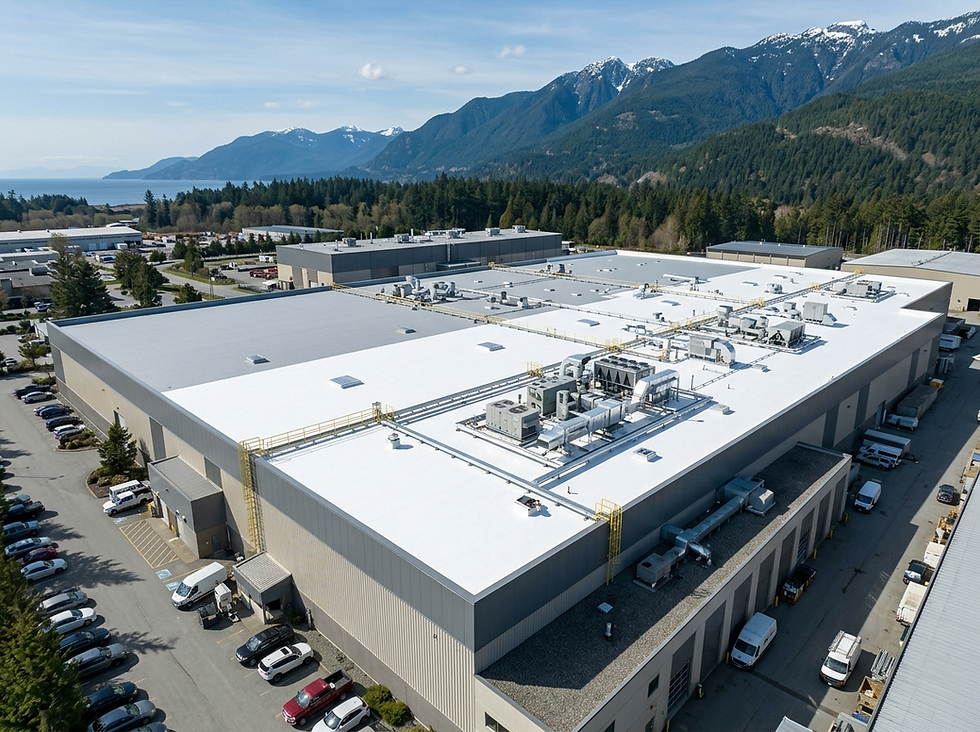
Industrial roofing upgrades are one of the most consequential decisions a plant manager or facility owner will make. The right upgrade protects your operations, your people, and your building envelope for decades. The wrong one — or a delayed one — creates leaks, compliance gaps, and unplanned downtime.
Here is a quick comparison of the most common industrial roofing upgrade paths:
Upgrade Type | Best For | Disruption Level |
Full Replacement | Roofs exceeding service life, structural damage, code non-compliance | High |
Refurbishment | Structurally sound roofs with localized damage | Moderate |
Restoration / Coating | Minor wear, sound deck and membrane | Low |
Metal Roof Retrofit | Existing metal roofs needing energy and weatherproofing upgrades | Low to Moderate |
Industrial roofs face stressors that commercial roofs simply do not — chemical exposure, heavy mechanical loads, thermal cycling from process equipment, and large uninterrupted spans that magnify every drainage or membrane failure. A roof that works on a retail strip mall will not hold up in a food processing plant or a distribution warehouse.
Most industrial roofs need refurbishment or replacement periodically. But in regulated facilities — food manufacturing, pharmaceutical, or Canadian GMP environments — the stakes are higher. A failing roof does not just mean structural deterioration. It can mean a production shutdown, a compliance failure, or contamination risk.
I'm Craig Garden, founder of NRG Consulting & Contracting, and our team has delivered industrial roofing upgrades as part of complex design-build projects across the Fraser Valley — from light industrial warehouses to food-grade and regulated facilities where envelope performance directly ties to operational compliance. In the sections below, we break down how to compare systems, plan your upgrade, and execute it without disrupting production.
Comparing Industrial Roofing Upgrades and Systems

Selecting the right system for Industrial roofing upgrades requires an understanding of how different materials interact with your facility's internal environment and the external BC climate. In the Lower Mainland, we deal with high moisture levels and temperature fluctuations that test the elasticity and seal integrity of any roofing assembly.
Industrial Roofing: Specialized Requirements and Solutions | National Roofing Authority highlights that industrial systems must manage unique load conditions and chemical exposure profiles. We categorize the primary systems used in BC industrial upgrades into three main groups:
Feature | TPO (Thermoplastic Polyolefin) | EPDM (Rubber) | Standing Seam Metal |
Primary Benefit | Heat-welded seams, high reflectivity | Exceptional UV and ozone resistance | Extreme durability, low maintenance |
Chemical Resistance | High (resistant to oils and fats) | Moderate (vulnerable to petroleum) | High (with appropriate coatings) |
Installation Method | Mechanically attached or adhered | Adhered or ballasted | Fastened to structure |
Selecting Materials for Industrial Roofing Upgrades
When we evaluate materials for your facility, we look beyond simple waterproofing. We assess the specific stressors your roof faces. For instance, food manufacturing facilities often exhaust animal fats or greases onto the roof surface. In these environments, we prioritize TPO or specialized PVC membranes because they resist degradation from oils that would quickly liquefy an EPDM or asphalt-based system.
UV stability and reflectivity also play a major role in long-term performance. Reflective "cool roofs" use white or light-coloured membranes to reflect solar energy. This reduces the thermal load on your HVAC systems and prevents the "heat island" effect common in large industrial parks in Langley or Abbotsford. For facilities with heavy rooftop equipment, we often recommend thicker membranes or reinforced walkway pads to protect the system from foot traffic during routine maintenance.
If you are planning a broader Industrial Plant Renovation, your roofing choice must integrate with your new mechanical and structural requirements.
Retrofit vs. Replacement for Industrial Roofing Upgrades
One of the most frequent questions we encounter is whether a facility needs a full tear-off or if a retrofit is viable. A full replacement involves removing the existing system down to the deck. We recommend this when the underlying insulation is saturated, the deck shows signs of structural corrosion, or the building code requires a complete system update to meet current thermal insulation standards.
A metal roof retrofit, however, allows us to install a new membrane system directly over an existing metal roof. We use "flute-fill" insulation—custom-cut pieces of rigid foam that fit between the ribs of your metal panels—to create a flat surface. We then install a high-performance membrane over the top. This approach avoids the risks of exposing your inventory or machinery to the elements during a tear-off and significantly improves the thermal performance of the building.
Before committing to a retrofit, we perform a structural assessment to ensure your existing frame can support the additional weight of the new materials. This is a critical step in our Industrial Facility Upgrades process to ensure long-term safety and compliance with the BC Building Code.
Specialized Requirements for Regulated Facilities
In regulated environments, such as pharmaceutical labs or Canadian GMP food plants, the roof is a critical component of the contamination control strategy. These facilities require precise pressure differentials and humidity control. A minor leak or even excessive vapor transmission through the roof can jeopardize a "clean" status.
We focus on several key areas for these facilities:
Vapor Retarders: We install high-performance vapor barriers on the warm side of the insulation to prevent condensation within the roof assembly, which is essential for cold storage and high-humidity processing areas.
MEP Integration: Industrial roofs often house complex HVAC and exhaust systems. We ensure that every penetration—whether for a new air handler or a plumbing vent—is flashed with engineered details that allow for thermal movement without breaking the seal.
Hygienic Design: We select materials that do not support mold or bacterial growth and can withstand the chemical cleaners used in washdown areas if the roof is part of a semi-enclosed processing space.
Executing a Seamless Roofing Refurbishment
A successful refurbishment is about more than just laying down new material. It requires a disciplined, step-by-step approach to ensure the new system performs as intended. According to Industrial Roof Refurbishment: Restore and Extend Roof Life, refurbishment can significantly extend a roof's service life when executed correctly.
Our process begins with a comprehensive inspection. We use thermal imaging to detect trapped moisture and core sampling to verify the condition of the substrate. Once we establish the roof's health, we move to surface preparation. This involves cleaning the existing membrane, repairing localized damage, and ensuring all transition points (where the roof meets walls or equipment) are secure.
Proper drainage is the most common failure point we see in Fraser Valley industrial buildings. During an upgrade, we often modify the drainage layout, adding or resizing scuppers and drains to handle the heavy rainfall typical of our region.
Minimizing Operational Disruptions During Installation
We understand that your facility cannot simply stop production for a roofing project. We manage Industrial roofing upgrades as "occupied-site" projects. This means we coordinate our work around your shifts and production schedules.
We often use a phased installation approach, where we section off the roof and complete work on one area at a time. This limits the "open" portion of the roof and minimizes the footprint of our equipment on your site. We also implement strict site controls, including debris containment and noise mitigation, to ensure our presence does not interfere with your internal operations. Safety stand-downs and daily briefings keep our crews and your staff aligned on high-risk activities, such as crane lifts or hot-work.
Compliance and Maintenance in the Fraser Valley
Every industrial roofing project in BC must adhere to the BC Building Code and WorkSafeBC standards. In Surrey, Langley, and across the Fraser Valley, local jurisdictions have specific requirements for wind uplift resistance and snow load capacity.
Safety is non-negotiable. We install permanent fall protection systems, such as guardrails and certified anchor points, as part of our upgrades. This not only protects our crews during installation but also ensures your maintenance teams are safe when they access the roof in the future.
To maintain your warranty and extend the life of your roofing system, we recommend a bi-annual inspection program. In the Fraser Valley, the transition between the dry summer and the wet autumn is the ideal time to clear drains, check seals, and identify any minor damage before it becomes a major leak during a winter storm.
Partnering for Long-Term Facility Performance
At NRG Consulting & Contracting, we view Industrial roofing upgrades through the lens of integrated project delivery. We aren't just looking at the membrane; we are looking at how the roof supports your entire facility's performance. Our design-build approach means we handle everything from the initial structural assessment to the final commissioning of the roof system.
Whether you are managing a warehouse in Chilliwack or a complex manufacturing plant in Mission, we provide transparent communication and technical expertise to ensure your project stays on track. We focus on creating a "non-event" for your facility managers—a project that is completed safely and without disrupting your core business.
If your facility is showing signs of age, or if you are planning an expansion that requires a roofing update, let’s discuss the most effective path forward. You can learn more about our comprehensive approach to facility management on our Industrial services page.
Ready to secure your building envelope? Contact us today to schedule a professional evaluation of your industrial roofing system. We serve clients across Surrey, Langley, Abbotsford, Chilliwack, Maple Ridge, and Mission, providing the technical reliability required for modern industrial operations.


Comments