A Guide to Estimating Industrial Process Plants

Why Industrial Process Plant Construction Estimating and Man-Hour Analysis Determines Project Success
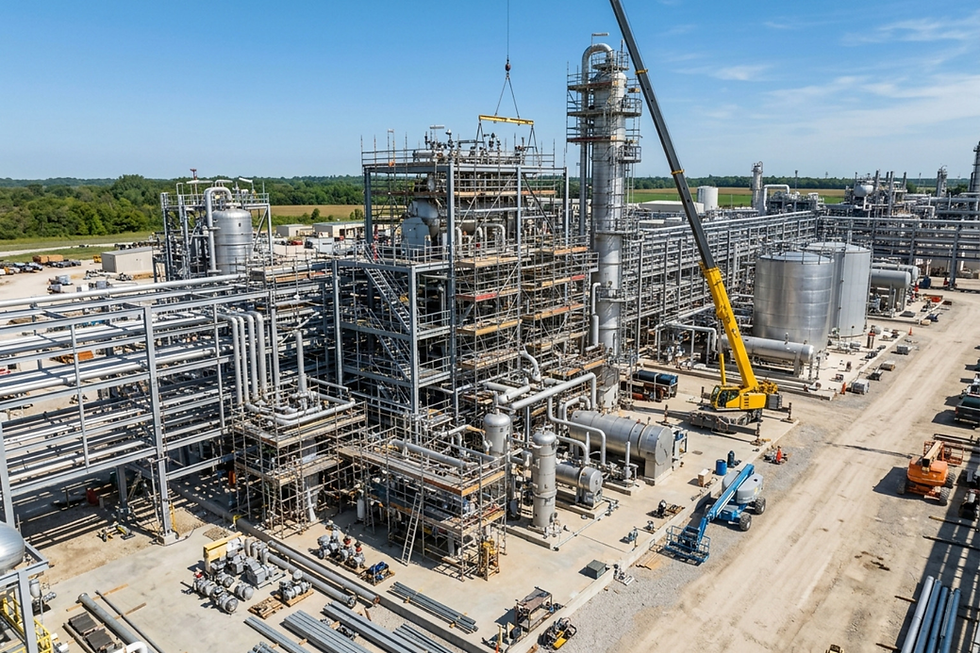
Industrial process plant construction estimating and man hour analysis is the process of calculating the direct craft labor hours and associated costs required to build or expand industrial facilities — such as oil refineries, power plants, chemical plants, and pulp and paper mills — using historical data, statistical tools, and structured estimating methodologies.
Here is what you need to know at a glance:
Man-hours (MH) measure the amount of work one average worker completes in one hour — the foundational unit of any labor estimate
Direct craft man-hour estimates cover field labor for tasks like process piping installation, equipment setting, structural steel erection, and boiler casing
Estimating methods range from conceptual (Class 4-5) to deterministic (Class 1-3), depending on project definition and available scope documents
Key inputs include historical man-hour data, verified productivity rates, scope of work documents, and plant-specific man-hour tables
Critical factors affecting labor hours include worker skill level, overtime schedules, site congestion, and design complexity
Industry standards like AACE International Recommended Practice 106R-19 define how estimates and their supporting Basis of Estimate (BOE) documents should be structured and documented
Labor productivity is one of the most important variables in any industrial construction estimate. A single error in your man-hour assumptions can cascade into significant schedule and scope consequences — which is why rigorous data collection, verification, and statistical analysis are non-negotiable on process plant projects.
Industrial facilities are not standard builds. Every refinery unit, boiler system, and process piping network carries its own scope complexity, trade mix, and productivity risk. Getting the labor estimate right from the start is what separates a predictable project delivery from one that unravels in the field.
I'm Craig Garden, founder of NRG Consulting & Contracting, and my background spans industrial process plant construction estimating and man hour analysis across complex, regulated, and technically demanding facilities — experience that directly shapes how NRG approaches pre-construction planning and design-build delivery. In this guide, I'll walk you through the methodologies, tools, and best practices that produce reliable estimates for industrial process plant projects.
Methodologies for Industrial Process Plant Construction Estimating and Man-Hour Analysis
We approach industrial estimating by first determining the level of project definition. In the early stages of a project, you may only have a Process Flow Diagram (PFD); as the project matures, you gain access to Piping and Instrumentation Diagrams (P&IDs) and detailed 3D models. Your methodology must evolve alongside this data.
The two primary paths for developing an estimate are deterministic and conceptual. Deterministic estimating relies on detailed unit costs and quantities, whereas conceptual estimating uses cost estimating relationships (CERs) and parametric models.
Feature | Conceptual Estimating (Class 4-5) | Deterministic Estimating (Class 1-3) |
Primary Goal | Strategic planning and feasibility | Detailed bidding and control baseline |
Scope Basis | PFDs, equipment lists, capacity data | P&IDs, isometric drawings, 3D models |
Methodology | Parametric, factored, or capacity-based | Unit quantity and comparison methods |
Data Source | Industry benchmarks and historical CERs | Detailed man-hour tables and line items |
For industrial services, we lean heavily on the unit quantity method. This involves breaking down the facility into its smallest measurable components—linear feet of pipe, tons of structural steel, or number of equipment items—and applying a verified man-hour rate to each.
Another essential technique is the comparison method. We use this to identify quantity and labor differences between proposed equipment and previously installed units. By eliminating the "impacts" or variables that don't apply to the new installation, we refine the estimate to reflect only the actual work required in the field.
Following AACE International Recommended Practice 106R-19, we ensure that every estimate is supported by a Basis of Estimate (BOE) that documents the methodology, technical basis, and cost basis used. This transparency allows any experienced reader to assess the estimate independently.
Utilizing Historical Data and Man-Hour Tables
Reliable industrial process plant construction estimating and man hour analysis requires a foundation of verified data. We often reference industry-standard resources like the Richardson Process Plant Construction Cost Estimating Standards (PPCES). This massive database contains approximately 4,000 pages of data and nearly 20,000 "Rapids"—shortcuts for rapid estimating tasks—covering everything from site work to complex process equipment.
For more specialized tasks, we look to schedules developed by experts like Kenneth Storm. These schedules provide man-hour units derived from thousands of hours of field installation data. For instance, a common metric in boiler installation is 0.35 man-hours per linear foot (MH/LF) for welding seal weld side, roof, and floor casing field seams on a Heat Recovery Steam Generator (HRSG).
Accessing these standards, such as the Richardson Process Plant Construction Cost Estimating Standards, provides a baseline "standard condition" estimate. We then adjust these figures based on the specific realities of the project site in the Lower Mainland.
Factors Influencing Labor Productivity in Process Plants
A "standard" man-hour unit assumes ideal conditions: skilled labor, proper supervision, and a clear work area. In the real world, especially during pre-construction planning, we must account for productivity "de-raters."
Key factors that impact labor productivity include:
Overtime Impacts: Extended work weeks (e.g., 60+ hours) lead to physical fatigue and "mental fading," which significantly reduces the output per hour.
Site Congestion: Multiple trades working in a tight refinery unit or power plant footprint create physical interference and safety delays.
Labor Skill and Availability: The proficiency of the local trade pool in areas like Surrey or Abbotsford directly affects how many hours a task takes.
Environmental Factors: Working in extreme BC weather or within an operating facility (brownfield) requires additional time for safety permits, mobilization, and PPE.
We analyze these factors to develop a productivity profile for the project. If a task is estimated at 100 man-hours but the site is congested and requires 10-hour shifts, we may apply a 1.2 multiplier, bringing the total expected labor to 120 hours.
Statistical Tools for Accuracy
Modern estimating has moved beyond simple arithmetic. We use statistical applications to organize and analyze historical data, ensuring our man-hour tables remain accurate over time.
Regression Analysis: We use linear regression to determine the relationship between two variables, such as the weight of a vessel and the man-hours required to set it.
Learning Curves: This accounts for the fact that a crew becomes more efficient as they repeat a task. On a project with hundreds of identical pipe spools, the 100th spool will take fewer man-hours than the first.
Time Series Forecasting: We use moving averages and exponential smoothing to predict how labor trends and productivity may shift over the duration of a long-term project.
Utilizing Excel templates for these functions allows us to automate the math, reducing the risk of manual entry errors. You can find more about these data-driven approaches in technical resources like Industrial Process Plant Construction Estimating and Man-Hour Analysis.

Best Practices for Executing Industrial Estimates in British Columbia
When we execute estimates for projects in the Fraser Valley, regional nuances play a massive role. An estimate for a facility in Chilliwack may face different logistical constraints than one in Langley or Mission.
Effective estimating requires a three-step validation process:
Benchmarking: We compare the current estimate against similar completed projects to ensure the overall man-hours per ton or per linear foot align with historical norms.
Validation: We verify that the scope is 100% covered. This includes checking that all indirect hours—like mobilization, demobilization, and site clean-up—are accounted for.
Reconciliation: If we are updating a previous estimate, we reconcile the differences. Did the scope grow? Did the productivity assumptions change? We document every "why" behind the numbers.
Developing a Robust Basis of Estimate for EPC Projects
The Basis of Estimate (BOE) is the most critical document in the estimate package. It serves as the "narrative" that explains the numbers. For Engineering, Procurement, and Construction (EPC) projects, a BOE must include:
Scope Summary: A clear definition of what is included (and excluded) from the estimate.
Execution Plan: How we intend to build the project. Will we use modular construction or stick-build? What is the shift schedule?
Technical Basis: A list of all P&IDs, specifications, and drawings used to develop the quantities.
Cost Basis: Documentation of the man-hour tables used, the labor rates applied, and any productivity adjustments made.
A well-structured BOE, especially for Class 1-3 deterministic estimates, ensures that when the project moves from the estimating phase to execution, the field team understands the assumptions they are working under.
Integrating into Design-Build Workflows
At NRG Consulting & Contracting, we specialize in an integrated design-build approach. By combining the design and construction phases, we can perform industrial process plant construction estimating and man hour analysis in real-time as the design evolves.
In regions like Surrey and Langley, this integration allows us to identify "constructability" issues early. If our man-hour analysis shows that a certain piping configuration is labor-intensive, we work with the design team to simplify the layout. This collaborative process reduces the risk of field change orders and ensures the project remains on schedule. Our design-build services focus on providing a single point of responsibility, which streamlines communication and ensures that the estimate and the execution plan are perfectly aligned.
Validating Estimates for Regulated GMP Facilities
For our clients in the pharmaceutical, nutraceutical, and food manufacturing sectors in Maple Ridge and Mission, estimating takes on an additional layer of complexity. Regulated facilities operating under Good Manufacturing Practice (GMP) or Canadian GMP standards require hygienic design and specialized construction workflows.
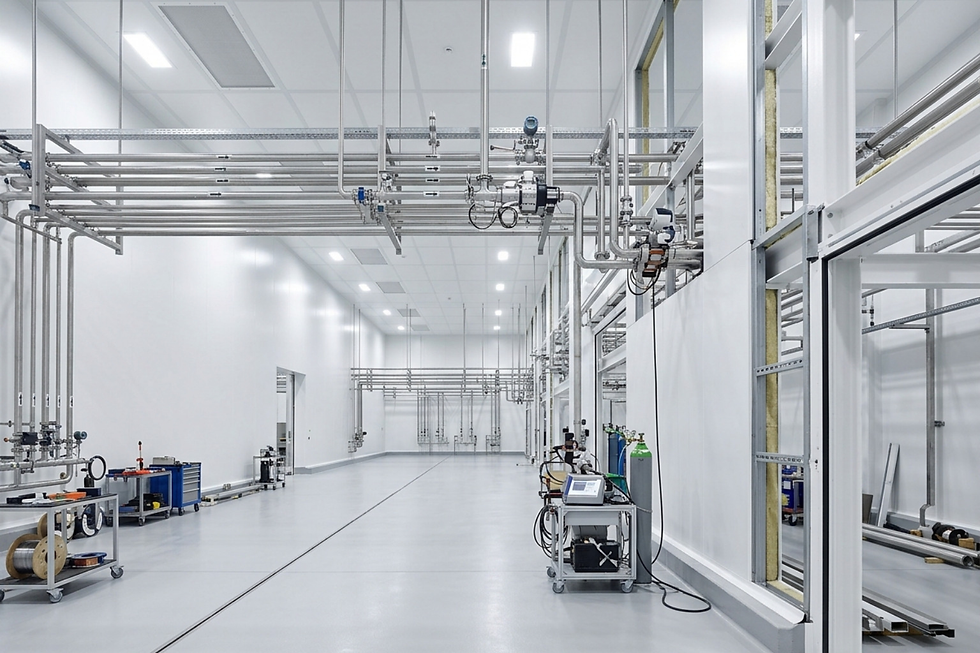
Estimating for these environments must account for:
Hygienic Design Requirements: Man-hours for specialized welding (e.g., orbital welding) and high-grade stainless steel finishes.
Cleanroom Protocols: The labor required for gowning, tool sterilization, and maintaining cleanliness classifications during construction.
BC Building Code Compliance: Ensuring all mechanical, electrical, and plumbing (MEP) systems meet stringent provincial standards for safety and accessibility.
Commissioning and Validation: The hours required for testing, balancing, and documenting that the facility meets its intended performance criteria.
We ensure that these "hidden" labor drivers are captured in the initial estimate. By applying a rigorous, data-driven approach to man-hour analysis, we provide our clients with the predictability they need to manage their operations with confidence.
Whether you are planning a plant expansion in Abbotsford or a new process facility in Chilliwack, accurate estimating is the first step toward a successful build. We focus on the details so you can focus on your production.


Comments