How to Effectively Maintain Construction Site Traffic Flow

Why Construction Site Traffic Management Is Critical to Industrial Safety

Construction site traffic management is the systematic coordination of vehicles, equipment, and pedestrians within and around a work zone to prevent collisions, injuries, and operational disruptions. A significant number of site incidents are caused by being struck by a vehicle or mobile equipment, with backing maneuvers representing a major hazard to workers.
Core Elements of Effective Construction Site Traffic Management
Separate pedestrian and vehicle routes with physical barriers and marked walkways
Minimize vehicle reversing through one-way systems and designated backing zones
Implement clear signage using reflective materials and advance warning signs
Deploy trained traffic control personnel with proper certification and communication equipment
Develop an Internal Traffic Control Plan (ITCP) documenting routes, hazards, and control measures
Monitor and adjust strategies based on project phases and site conditions
For industrial and commercial projects in Surrey, Langley, Abbotsford, and throughout the Fraser Valley, construction site traffic management directly impacts worker safety, project timelines, and regulatory compliance. Poor traffic control increases accident risks, causes delays, and creates liability exposure.
Managing traffic on industrial construction sites requires more than placing a few signs. You need a comprehensive approach that addresses vehicle-pedestrian conflicts, eliminates blind spots, coordinates material deliveries, and maintains compliance with WorkSafeBC regulations and the BC Building Code.
This guide explains how to implement traffic management practices that protect your workers, maintain operational efficiency, and meet regulatory requirements for industrial and commercial construction projects across the Lower Mainland.
Core Components of Construction Site Traffic Management
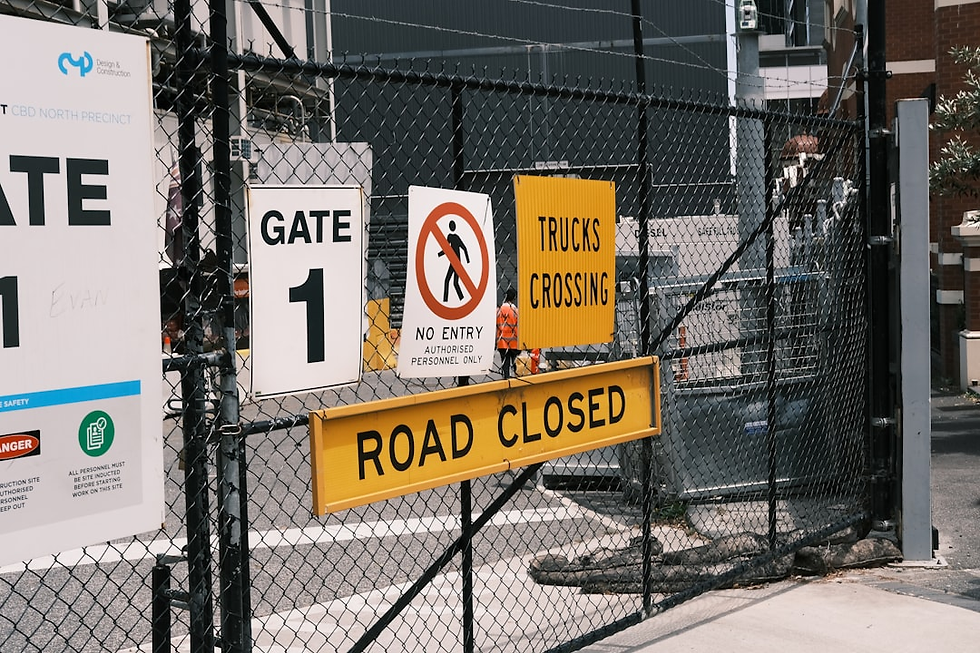
Effective construction site traffic management relies on a structured framework that dictates how every asset moves within the facility perimeter. We categorize these efforts into two distinct but overlapping plans: the Temporary Traffic Control Plan (TTCP) and the Internal Traffic Control Plan (ITCP). While the TTCP manages how public traffic interacts with your site boundaries, the ITCP governs the movement of construction vehicles and personnel inside the "work space."
To maintain WorkSafeBC compliance, we prioritize the hierarchy of controls. The most effective strategy involves eliminating the hazard entirely by segregating pedestrians from heavy machinery. When we cannot eliminate the interaction, we implement engineering controls like physical barriers and administrative controls like site-specific inductions.
Comparing ITCP and TTCP Frameworks
Feature | Internal Traffic Control Plan (ITCP) | Temporary Traffic Control Plan (TTCP) |
Primary Focus | Internal site vehicles and workers on foot | Public motorists and pedestrians |
Goal | Prevent runovers and backovers | Maintain public flow and safety |
Key Tools | Spotters, backing zones, exclusion areas | Cones, barrels, flaggers, lane closures |
Regulatory Lead | WorkSafeBC / Occupational Health | BC Ministry of Transportation / Municipal |
Designing an Effective Internal Traffic Control Plan for Construction Site Traffic Management
A robust ITCP serves as the blueprint for daily operations. It identifies high-risk zones where heavy equipment, such as excavators or dump trucks, operates in proximity to laborers. Research highlights the vulnerability of personnel on foot at road construction sites, emphasizing the need for strict internal controls.
We design these plans to minimize backing maneuvers, which are the leading cause of site fatalities. When reversing is unavoidable, we mandate the use of trained spotters who remain in constant communication with the operator. All personnel must wear high-visibility Class II or III apparel to ensure they remain visible within equipment blind spots.
To further mitigate construction site risk, we establish clear buffer zones between active machinery and walkways. These "no-go" zones prevent accidental contact if an operator loses control or a worker inadvertently steps into a swing radius. We also map out specific equipment paths that avoid crossing pedestrian thoroughfares whenever possible.
Strategic Signage and Access Management
Visibility and clarity drive safety. Strategic signage placement ensures that every driver—whether a regular site worker or a third-party delivery driver—understands the rules of the road the moment they enter the gates. We utilize reflective materials and clear, concise messaging to ensure visibility during the early morning or late evening shifts common in Fraser Valley winters.
Access management involves more than just a gate. We analyze entry and egress points to ensure they accommodate the turning radii of oversized industrial equipment without creating bottlenecks. According to research on site traffic control, inadequate planning at entry points often leads to vehicles backing out onto public roads, creating a significant liability.
Our approach includes:
Advance Warning Signs: Placed well before the site entrance to alert approaching traffic.
Site-Specific Routing: Directional signs that guide vehicles to specific loading docks or staging areas, reducing unnecessary cross-site travel.
Obstacle Removal: Ensuring sightlines remain clear by prohibiting the storage of materials near junctions or crossings.
Compliance with BC Building Code: Ensuring all temporary access routes meet load-bearing and width requirements for emergency vehicle access.
Implementing Advanced Safety Protocols on Site
Implementation is where the plan meets the reality of a busy industrial site. In locations like Surrey or Langley, where industrial parks often border high-traffic commercial zones, coordination becomes a precision exercise. We synchronize delivery schedules to avoid peak hours, reducing the impact on local infrastructure and minimizing congestion at our site gates.
Best Practices for Flagging and Personnel Training
Traffic control persons (TCPs) are the front line of construction site traffic management. In British Columbia, these individuals must hold valid certification and demonstrate competency in handling complex vehicle interactions. We provide site-specific inductions for every worker, ensuring they understand the unique hazards of the project before they set foot in the work zone.
Effective flagging requires more than a paddle. We equip our teams with two-way radios and electronic communication devices to coordinate movements across large industrial footprints. Following traffic management guidelines, we emphasize standardized hand signals and rigorous PPE standards to ensure every TCP remains safe and authoritative.
Leveraging Technology for Construction Site Traffic Management
Modern industrial construction utilizes technology to close the gap between human error and site safety. We integrate dynamic message signs (DMS) that we can update in real-time to reflect changing site conditions or lane closures. Site cameras and GPS tracking allow us to monitor vehicle speeds and adherence to designated routes from a central management office.
As part of our broader site management strategies, we coordinate the installation of data pathways and power infrastructure to support automated barriers and sensor-based alarm systems. These technologies provide an extra layer of protection, alerting operators if a pedestrian enters a restricted zone or if a vehicle exceeds the site speed limit (typically 15-20 km/h).
Integrating Pedestrian and Multi-Modal Safety
On large-scale industrial projects, we must account for various modes of transport. This includes dedicated walkways for workers, bicycle accommodations for those commuting in urban areas like Maple Ridge or Abbotsford, and ensuring all pathways meet BC accessibility standards.
We use physical barriers, such as concrete Jersey barriers or heavy-duty fencing, to create "free zones" where pedestrians can move without fear of vehicle interaction. Interlocked gates provide a mandatory pause point at crossings, requiring pedestrians to stop and look before entering a vehicle path. Managing material management effectively also means ensuring that pallets, crates, and debris never obstruct these vital safety corridors.
Continuous Monitoring and Plan Adjustments
A traffic management plan is a living document. As a project transitions from excavation to structural steel and finally to tenant improvements, the traffic patterns shift. We conduct regular risk assessments and site audits in Langley, Abbotsford, and Mission to ensure our controls remain effective.
Our team at NRG Consulting & Contracting utilizes site safety reviews and operational feedback to refine our strategies. If we identify a recurring bottleneck or a frequent safety violation, we adjust the staging or routing immediately. This proactive approach to site management services ensures that safety never takes a back seat to production.
Defining the Challenge: The Complexity of Industrial Flow
Industrial construction sites are high-stakes environments. You are managing heavy equipment, constant material deliveries, and a diverse workforce within a confined space. The challenge lies in the unpredictability of these elements. A single delayed delivery can create a queue that spills onto a public road in Chilliwack, while a misplaced excavator can block a vital emergency egress route.
Without a structured approach, these sites become chaotic. Chaos leads to accidents, and accidents lead to shutdowns. For facility owners and operations directors, the risk isn't just a safety violation; it is the complete stoppage of progress.
Explaining the Risks of Poor Traffic Coordination
The risks of failing to master construction site traffic management are both physical and operational:
Personnel Injury: The most severe risk involves workers being struck by backing vehicles or moving plant equipment.
Operational Stagnation: Congestion prevents materials from reaching the work face, leading to idle crews and blown schedules.
Regulatory Penalties: WorkSafeBC maintains strict oversight; failures in traffic coordination can result in regulatory penalties and stop-work orders.
Public Liability: If site traffic interferes with public safety or local infrastructure in the Fraser Valley, the legal and reputational consequences are immense.
Compliance and Regulatory Considerations
In British Columbia, we operate under a rigorous regulatory framework. Our traffic management strategies align with:
WorkSafeBC Occupational Health and Safety Regulation: Specifically regarding the movement of vehicles and equipment in the workplace.
The BC Building Code: Ensuring all temporary structures and access routes meet life-safety requirements.
Municipal Bylaws: We coordinate with local authorities in Surrey, Langley, and Abbotsford to ensure our site access permits and noise variances remain in good standing.
Canadian GMP Standards: For our clients in the food and pharmaceutical sectors, we ensure traffic flow does not compromise hygienic zones or cross-contamination protocols.
The Benefits of Mastered Traffic Management
When you partner with a contractor that excels in traffic coordination, your project gains several advantages:
Enhanced Safety Culture: Workers feel safer and perform better when they aren't constantly dodging heavy machinery.
Predictable Timelines: Efficient flow means materials arrive exactly when needed, keeping the critical path on track.
Reduced Liability: Documented ITCPs and certified personnel protect you from the legal fallout of site incidents.
Minimized Community Impact: Professional management keeps your neighbors in the Fraser Valley happy by reducing noise and road congestion.
Confident Next Steps for Your Industrial Project
Mastering construction site traffic management is essential for any industrial or commercial project in the Lower Mainland. Whether you are expanding a food processing facility in Abbotsford or upgrading a pharmaceutical cleanroom in Surrey, the way you move people and equipment defines your success.
If you are ready to ensure your next project is managed with precision, safety, and compliance-aware thinking, we are here to help. Our team provides the integrated project delivery and transparent communication needed to handle even the most complex traffic environments.
Contact us today to talk through your upcoming project in Surrey, Langley, Abbotsford, Chilliwack, Maple Ridge, or Mission. Let’s build a site that moves as safely as it does efficiently.


Comments