A Comprehensive Guide to Building Envelope Repairs

Why Building Envelope Repairs Demand a Proactive Approach

Building envelope repairs are the systematic process of restoring and maintaining the exterior assembly of a commercial or industrial structure including walls, roofing, windows, doors, sealants, flashings, and below-grade waterproofing so the building continues to function as a reliable weather and thermal barrier.
Quick answer: What do building envelope repairs involve?
Assessment: Inspect all envelope components for water intrusion, air leakage, sealant failure, and structural deterioration
Diagnosis: Use thermal imaging, moisture mapping, and destructive testing to identify root causes
Scope definition: Determine whether targeted component repairs or full envelope remediation is required
Execution: Restore weather barriers, flashings, cladding, and sealant systems in the correct sequence
Documentation: Record all work for compliance, warranty, and future maintenance reference
The building envelope is your facility's first and most critical line of defense. When it fails, even partially, water infiltrates wall assemblies, insulation loses performance, and structural components begin to deteriorate. For commercial and industrial operators in the Lower Mainland and Fraser Valley, the consequences extend beyond visible damage. Envelope failures disrupt operations, compromise regulated environments, and demand significantly more effort to remediate once deferred.
The research is clear: the building envelope accounts for a significant portion of energy consumption in commercial buildings, and deferred maintenance accelerates water infiltration, mold growth, corrosion, and structural compromise. Addressing failures early, before they cascade through a wall assembly, is the most operationally sound approach.
I'm Craig Garden, founder of NRG Consulting & Contracting, and our team has delivered building envelope repairs and exterior restoration programs across commercial, industrial, and regulated facilities throughout Metro Vancouver and the Fraser Valley. This guide covers everything you need to know, from identifying failure points to executing phased remediation on occupied sites.
Critical Challenges in Commercial and Industrial Building Envelope Repairs

Industrial and commercial facilities present unique structural challenges. Unlike standard light-commercial properties, these buildings feature complex wall assemblies, large-scale glazing, parapets, and specialized roof-to-wall transitions. When the exterior barrier fails, several critical challenges occur simultaneously.
Water infiltration stands as the most immediate threat. Once moisture bypasses the outer cladding, it travels along framing members, pools on floor slabs, and rots sheathing. This moisture migration quickly leads to structural compromise. In concrete structures, water penetrates the substrate and reaches internal reinforcing steel, causing rebar corrosion and concrete spalling.
At the same time, air leakage and thermal bridging degrade the thermal performance of your facility. When sealants degrade, conditioned indoor air escapes while unconditioned outdoor air enters, placing an immense load on your HVAC systems.
Identifying Failure Points in Regulated Facilities
In regulated environments, such as food manufacturing plants, pharmaceutical facilities, and Canadian GMP-regulated cleanrooms, envelope failures pose an immediate threat to operational compliance. If moisture breaches the exterior wall assembly, it creates breeding grounds for mold and bacteria, directly compromising the hygienic design of the interior spaces.
We utilize advanced diagnostic tools like moisture mapping and thermal imaging to identify hidden moisture pathways before they breach your cleanroom boundaries. These tools detect temperature differentials caused by wet insulation or air leaks, allowing us to pinpoint the exact failure location without unnecessary demolition.
When evaluating a compromised exterior, we must determine the appropriate scale of intervention. The table below outlines the operational differences between simple component repairs and full exterior envelope remediation:
Feature / Scope | Simple Component Repairs | Full Exterior Envelope Remediation |
Primary Focus | Localized maintenance and prevention | System-wide restoration of the wall assembly |
Typical Activities | Sealant replacement, minor tuckpointing, local flashing repairs | Cladding replacement, weather barrier restoration, framing repairs |
Disruption Level | Minimal; localized access only | Moderate to high; requires comprehensive site controls |
Operational Lifespan | Short-to-medium term (requires ongoing monitoring) | Long-term facility performance and structural protection |
Best Suited For | Early-stage degradation with intact sub-layers | Systemic water infiltration and failed sub-barrier layers |
Understanding these differences helps facility managers choose the correct path to address the mechanics of moisture migration and protect the building's structural integrity.
Regional Climate Impacts on Building Envelope Repairs
The geography of the Lower Mainland and the Fraser Valley dictates specific envelope failure patterns. In municipalities like Abbotsford, Chilliwack, and Mission, buildings face extreme wind-driven rain. This constant hydraulic pressure forces water into even the microscopic cracks of masonry joints and sealant interfaces.
Furthermore, our winter climate brings frequent freeze-thaw cycles. When water penetrates porous exterior masonry or concrete and subsequently freezes, it expands. This expansion fractures the material, leading to accelerated spalling and joint failure.
Our local Fraser Valley facilities demand robust rainscreen systems, high-movement UV-stable sealants, and breathable elastomeric coatings that allow internal moisture vapor to escape while blocking external wind-driven rain.
The Role of Engineering Consultants in Building Envelope Repairs
Large-scale envelope restoration programs require independent technical oversight to manage risk. Before we open a wall, we coordinate with specialized forensic engineering consultants. These experts perform destructive testing, opening targeted inspection windows in the cladding, to assess the condition of the hidden sheathing, framing, and weather-resistive barrier (WRB).
The consultant develops precise technical specifications and provides independent oversight throughout the construction phase. This process ensures that the repair design addresses the root cause of the failure rather than just masking the symptoms. We collaborate with local engineering specialists to verify that every detail complies with local environmental demands and municipal requirements.
Executing Envelope Restoration and Compliance Programs
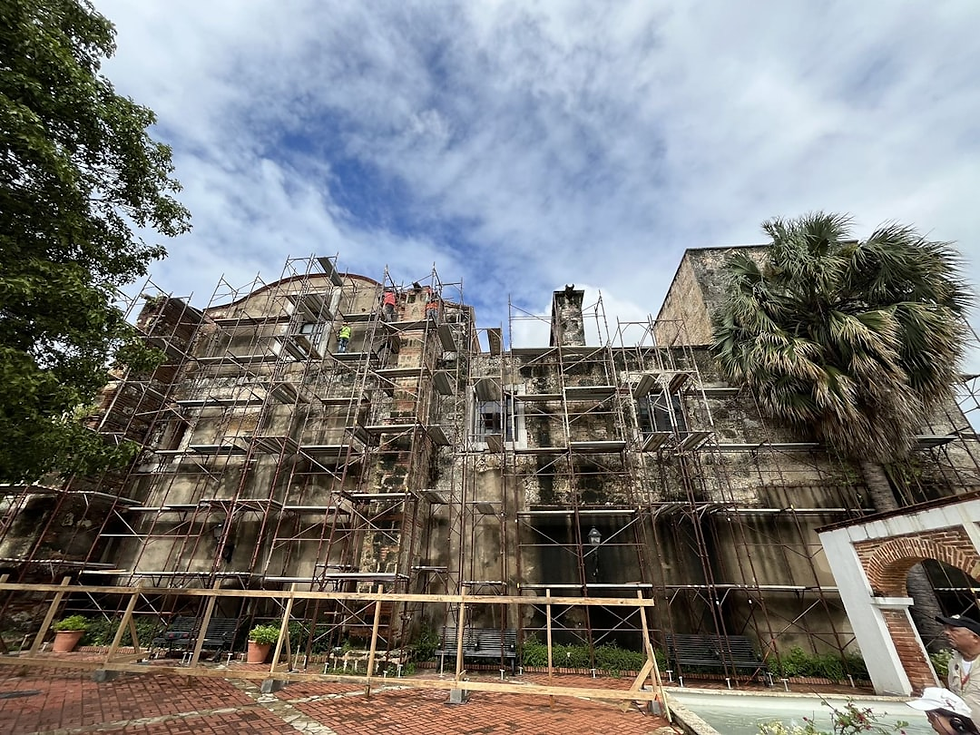
A successful exterior restoration project requires meticulous planning, strict material compatibility controls, and rigorous quality assurance. We treat the building envelope as a single, fully integrated system where the roof, walls, windows, and foundation barriers must connect seamlessly.
Phasing Construction to Maintain Operational Continuity
Executing building envelope repairs on occupied industrial or commercial facilities requires precise logistics to protect your daily operations. We design custom phasing plans that allow your facility to remain fully operational.
To minimize disruption, we utilize swing-stage access systems instead of ground-supported scaffolding where possible, keeping parking areas and loading docks clear. Our teams establish strict dust containment zones and implement noise-mitigation protocols, especially when working near executive offices or sensitive laboratory environments. We coordinate daily with your plant managers to schedule high-impact activities around your production shifts, ensuring complete safety and operational continuity.
Regulatory Compliance and BC Building Code Standards
All exterior remediation programs in British Columbia must comply with the current BC Building Code. This framework mandates strict performance criteria for thermal resistance, air tightness, and moisture control.
Depending on the municipality, you must secure specific permits before starting work. For example, projects in Surrey require a Building Envelope Remediation Permit | City of Surrey. These municipal permits require professional field reviews and letters of assurance from registered professionals to certify that the completed work meets all safety and energy standards.
Our teams manage these compliance pathways across all our local service areas, including Surrey, Langley, Abbotsford, Chilliwack, Maple Ridge, and Mission. Whether you execute an envelope restoration in Langley or manage a remediation project in Chilliwack, we coordinate the entire permitting, engineering review, and municipal inspection process. We work closely with leading building envelope consultants to ensure every detail complies with local standards.
Long-Term Operational Benefits of Envelope Integrity
Investing in systemic envelope repairs delivers immediate operational advantages. By restoring the continuity of your air and thermal barriers, you significantly reduce the load on your HVAC systems, leading to improved energy efficiency and more stable interior climate controls.
Furthermore, proactive restoration prevents the need for disruptive emergency repairs down the road. By addressing sealant failures, flashing defects, and localized masonry cracking today, you protect the structural framing of your facility and support long-term operational performance.
At NRG Consulting & Contracting, we specialize in providing tailored, high-performance exterior solutions for commercial and industrial facilities. We manage the entire process from initial diagnostic coordination through to final municipal sign-off. To learn more about our comprehensive exterior capabilities, explore our Building Envelope Repairs and General Contracting Services.
Take the Next Step in Safeguarding Your Facility
Do not wait for a minor leak to turn into an operational disruption. If you suspect your facility's exterior barrier is failing, take a proactive approach to protect your infrastructure. Contact NRG Consulting & Contracting today to schedule a technical consultation with our commercial and industrial construction specialists. We will help you assess your building's exterior, coordinate with leading forensic engineers, and execute a phased, compliant restoration program tailored to your operational needs.


Comments